
• Skip to primary navigation
  • Skip to content
  • Skip to primary sidebar

Kanpai

Find us on Facebook Find us on Twitter Find us on Instagram
  • Shochu
    • What is Shochu?
    • How to Drink Shochu
    • The Shochu Diet
    • Shochu Tasting Notes
      • Awamori
      • sweet potato shochu reviews
      • mugi (barley)
      • rice shochu reviews
      • Aromatic Shochu Reviews
  • Izakaya
    • What is an Izakaya?
    • Izakaya Cuisine
  • How to Izakaya
  • Events
  • About Us

Toki No Kokuin

November 21, 2011 by Stephen 3 Comments

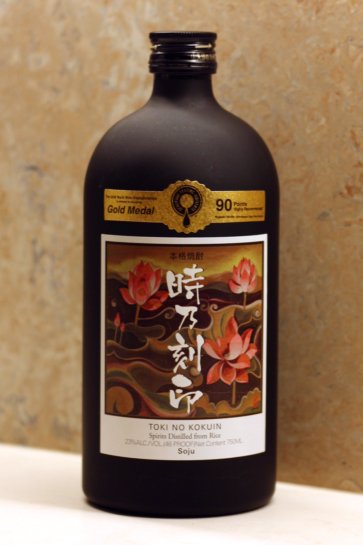
TokinokokuinBrand: Toki No Kokuin (時乃刻印)

Distillery: Miyazaki Honten Co, Ltd.

Location: Miyazaki Prefecture, Kyushu Island, Japan

Grain: 100% Japonica rice (kome)

Koji: black

Alcohol: 23% (46 proof)

Price: $$


Tasting Notes 

Toki No Kokuin is an award winning shochu, reciving a Gold Medal at the 2009 World Wine Championships. This reflects, no doubt, the extremely neutral and easy-drinking nature of the spirit. This pure rice shochu is very easy drinking despite aging for 3 years in oak barrels. While there is very little English language information avialable, my guess is that these are virgin oak barrels as there is no hint of any other oak-aged spirit in the flavor.

The neutral, slightly alcoholic nose leads to a smooth, sweetish flavor. Again, very neutral. The finish is slightly sweet with a hint of mint.


The Verdict: Worth Drinking

Toki No Kokuin lives up to the name of a kome shochu. These tend to be the smoothest, easiest drinking of all shochu varieties. This would make excellent cocktails, but you might hesitate to mix this lovely spirit only because it’s so pleasant to drink on its own.


Kampai!


Filed Under: Shochu, Shochu Reviews Tagged With: Japonica rice, kome, kuro koji, oak barrels, review, shochu, Toki No Kokuin, Tokinokokuin

« Shochu Diet Update!
Take to the Skies »

Reader Interactions

Comments

  1. Comradde PhysioProffe

    March 9, 2013 at 4:54 pm

    Just bought a bottle of this stuff and am drinking my first glass on the rocks. I actually didn’t have any idea before buying it that it was oak aged, and I was pleasantly surprised when I saw the nice color as I poured it! Very nice stuff.

    Reply
  2. Todd Nowensky

    February 23, 2017 at 12:51 pm

    I would like to order a few bottles of this Shochu. Please let me know if this can be accessed from the LCBO (Ontario).

    Thanks,

    Todd

    Reply
    • Stephen

      February 28, 2017 at 12:24 pm

      Todd: I am not a distributor or importer, only a shochu lover who shares information. I’d recommend you visit one of your larger liquor stores and see what selection they have available. I’ve only seen a handful of brands available in Canada, unfortunately. You have very restrictive alcohol laws, even relative to the US.

      Reply

Leave a Reply Cancel reply

Your email address will not be published. Required fields are marked *

Primary Sidebar


Warning: count(): Parameter must be an array or an object that implements Countable in /home/michaels/public_html/kampai.us/wp-content/plugins/custom-twitter-feeds/inc/CtfFeed.php on line 1856
Twitter feed is not available at the moment.

Shochu Reviews

iichiko Kurobin

My personal favorite iichiko brand available in the US is iichiko Kurobin. Kurobin is literally translated as "black bottle," which is a pretty on the nose description of this evocative packaging. It is simply too pretty to throw away after finishing.

Shochu Reviews

iichiko silhouette

This iichiko silhouette is probably the most common Japanese shochu currently available in the United States. In NYC I’ve seen it in random mom & pop liquor stores as the only shochu among a shelf of sake options. It’s most commonly available in 750ml bottles, though I’ve seen other sizes in other countries. This is a great starter shochu, which is why I’ve chosen it for my first tasting note. It was my introduction to shochu back in 2008. I’d had Korean soju before, but Japanese shochu is a strikingly different (and better) experience.

The SG Shochu Cocktail Recipes

Bartender Shingo Gokan mixes a cocktail.
The SG Shochu brand manager, Joshin Atone, talks with Kanpai.us about shochu's versatility and potential in the cocktail. He also shares three recipes for bartenders to try.

Tasting Notes: Nankai

Nankai Shochu
At first whiff, Nankai smells faintly grassy, which is common in kokuto shochu owing to how kokuto sugar is made from fresh cut cane and that fresh grassiness is a sign of well made kokuto sugar. Sugar cane is, after all, a tall perennial grass. It is still pretty wild that they can capture that after fermentation and distillation.

Shochu Reviews

Tasting Notes: Lento Shochu

Lento is the top selling kokuto shochu in Japan, and it is available internationally as well. Try it on the rocks or with sparkling water for a refreshing taste of the Amami Islands. Kanpai!

Tasting Notes: The SG Shochu MUGI

The SG Shochu MUGI Label
The SG Shochu MUGI wraps several barley shochu identities into one. It's lightly barrel-aged and carries the associated sweet notes. But there's also a graininess that is revealed when the temperature of the drink drops. It's a versatile barley shochu that can be enjoyed a variety of ways.

Tasting Notes: The SG Shochu IMO

The SG Shochu IMO is a clear invitation to create the classic imo cocktail. If you get it right, it will resonate and cascade around the world until you can't not have sweet potato shochu on your menu if you consider yourself a proper drinking establishment.

Copyright © 2026 · Foodie Pro & The Genesis Framework